
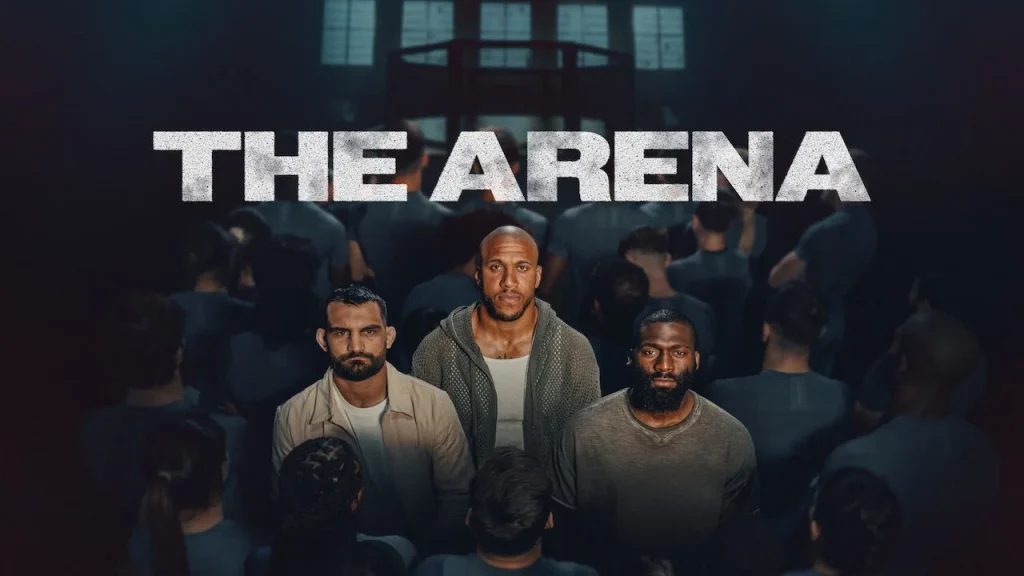
Netflix’s The Arena shone a fresh spotlight on amateur MMA. It featured 38 fighters competing for cash prizes and a professional contract. The competition featured 19 men in the welterweight division (170 lbs) and 19 women in the bantamweight division (135 lbs).
The show also featured some of France’s biggest MMA names. UFC heavyweight Ciryl Gane helped oversee the competition and kicked things off with the opening tests. UFC lightweight Benoît Saint Denis and former GLORY kickboxing champion Cédric Doumbé served as opposing team coaches. They drafted fighters, provided guidance, and prepared them for elimination bouts.
With that level of star power involved, the show gave lesser-known fighters a chance to showcase their skills to a much larger audience. In the end, two fighters emerged victorious, earning the opportunity to take the next step in their MMA careers. Let’s take a closer look at both winners, their backgrounds, skill sets, and potential as professional prospects.
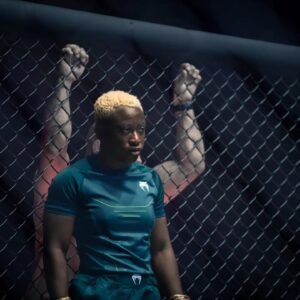
Assita Ouattara (10-0)
Ouattara was born in Ivory Coast and moved to France at 11. She trained in judo before moving on to wrestling, Brazilian jiu-jitsu, and eventually MMA. While winning this show is her biggest accomplishment, it’s not the only one under her belt. Ouattara is a three-time MMA League tournament champion. If you count her official Tapology record, she’s 10-0. The only thing is time isn’t on her side. She’s already 30 and hasn’t had a single pro bout yet.
Ouattara’s entire style is built around relentless pressure, both on the feet and on the ground. Despite being undersized in several of her fights, she’s never shied away from closing the distance and exchanging in the pocket. Her striking is sloppy, her entries can be reckless, and her overall technique leaves plenty to be desired. However, she makes up for those shortcomings with volume, aggression, and an unconventional boxing style that has proven effective. It isn’t pretty, but her willingness to push forward and constantly work has brought her plenty of success.
Her wrestling is just as unconventional. Ouattara often shoots too low on single-leg attempts and frequently relies on 50/50 judo throws. She often puts herself in bad positions, but her scrambling ability has consistently bailed her out. She’s excellent at creating movement and finding ways to escape unfavorable situations. Ouattara also tends to prioritize damage over position, which isn’t necessarily a bad thing considering how active she is. Regardless of where she ends up on the ground, she’s constantly throwing short punches and looking to score with ground-and-pound.
What makes Ouattara effective is the pace she brings. Without that relentless output, I don’t believe she’d have nearly the same success. Even when she looks exhausted, she somehow finds another gear and keeps working from bell to bell. Sometimes, she works until she finishes. She won’t blow anyone away with her technical abilities, but her toughness, conditioning, and work ethic deserve respect. At 30, she’ll need to hit the ground running, as her prime years are becoming limited. I’m interested to see how she adjusts to five-minute rounds and whether her chaotic, pressure-heavy style can translate successfully to the professional ranks.

Jean Magny (12-3)
Jean “Captain France” Magny doesn’t have a spotless record, but on the show, she came out as a promising soon-to-be pro. His official record as an amateur is 12-3, and those three losses came by split decisions, all against good fighters. His career outside the show ended with a six-fight win streak and titles in AEC and Coliseum.
Magny arguably had the toughest road to the championship. He faced three opponents with the potential to become quality professionals. While all three fights went to a decision, I think that speaks more to the level of competition than anything else. I’ll admit he tends to fight on thin margins, but at just 24, Magny is already an incredibly well-rounded martial artist.
On the feet, Magny may lack killer instinct, but he makes up for it with sharp technique and very few mistakes. I love his jab and how effectively he uses it to attack both the head and body. He puts together crisp, short combinations and attacks from different angles. He also uses good footwork to create openings down the middle and from either side. His head movement is another strong point, as he’s excellent at slipping punches and immediately returning fire. One of the biggest things that stood out to me was his takedown defense. Magny faced solid wrestlers throughout the competition and defended every attempt.
As good as he looks on the feet, I believe Magny is even more comfortable in the wrestling and grappling departments. His takedowns are well-timed, and he does an excellent job getting into the right positions to finish. On the mat, I like his positional control and willingness to stay active with ground-and-pound, even if his strikes aren’t particularly damaging. He’s also an excellent scrambler who takes advantage of transitions to work his way to the back. That ability has been a major weapon throughout his career, with six rear-naked choke wins.
Looking ahead to his professional career, I have very few concerns about Magny. He’s already technically sound, well-rounded, and possesses nearly all the qualities you want to see in a young prospect. The one thing missing is finishing power on the feet, as he has yet to record a single KO/TKO victory. However, I believe that will come with time as he continues to develop. At 24, Magny has a bright future and the foundation to become a very good professional fighter.
